lesson 3: Anatomy of dental pulp
Lesson 3: Composition of the Pulp
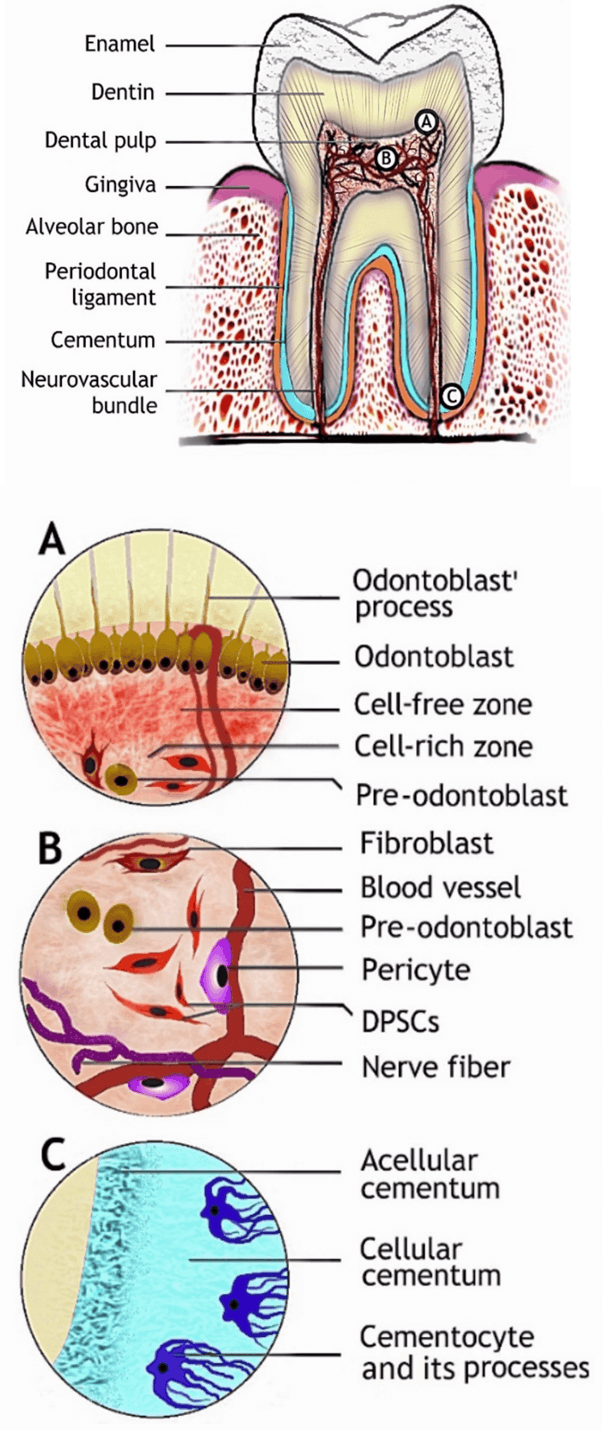
The dental pulp is a complex soft tissue located in the center of the tooth. It contains a variety of cellular and extracellular components, vascular supplies, and nerves that are essential for the tooth’s vitality.
1. Cellular components of the pulp
- Odontoblasts ▪ Position: At the periphery of the pulp (dentin-pulp interface). ▪ Function: Responsible for dentin formation (forms a single layer).
- Fibroblasts ▪ The most abundant cells in the pulp. ▪ Function: Produce and maintain the extracellular matrix (collagen and ground substance).
- Immune Cells ▪ Macrophages: Phagocytosis of debris and pathogens. ▪ Dendritic Cells: Act as antigen-presenting cells to trigger immune response. ▪ Lymphocytes: Active during pulpal inflammations.
- Stem Cells ▪ Dental Pulp Stem Cells (DPSCs): Can differentiate into odontoblasts or fibroblasts, especially during repair.
2. Extracellular matrix (ECM)
- Collagen Fibers: Primarily Types I and III.
- Ground Substance: Composed of glycosaminoglycans, proteoglycans, and water.
- Function: Provides structural support and a medium for nutrient and waste exchange.
3. Blood supply of the pulp
Importance of Blood Supply:
Ensures supply of oxygen and nutrients, removal of waste, and facilitates rapid immune responses.
- Arterial Supply: ▪ Arterioles enter through the apical foramen. ▪ They carry oxygenated blood to the pulp.
- Venous Drainage: ▪ Veins exit through the apical foramen. ▪ They remove deoxygenated blood from the pulp.
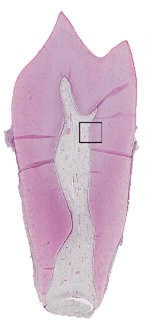
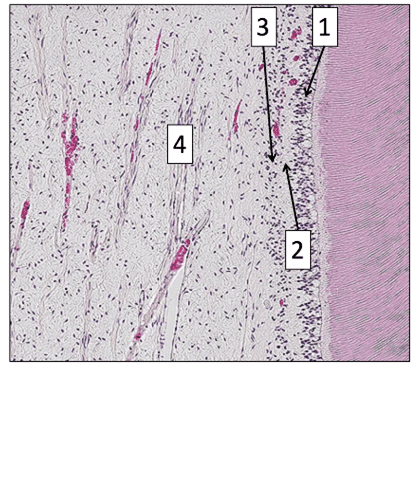
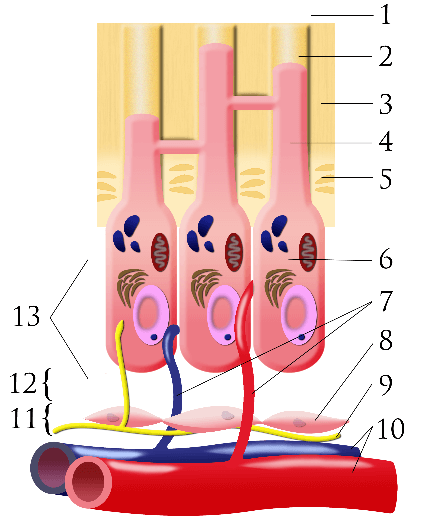
Pulpal Dentin Junction (Outer to Inner)
- Outside tooth/enamel
- Dentin tubule
- Dentin
- Odontoblastic process
- Predentin
- Odontoblast
- Capillaries
- Fibroblasts
- Nerve
- Artery/vein
- Cell-rich zone
- Cell-poor zone (Zone of Weil)
- Pulp chamber
4. Innervation of the pulp
Nerve fibers originate from the trigeminal nerve.
Sensory nerve fibers (Pain)
- A-delta fibers: ▪ Myelinated fibers. ▪ Transmit sharp, localized pain. ▪ Activated by stimuli like cold or pressure.
- C-fibers: ▪ Unmyelinated fibers. ▪ Transmit dull, throbbing pain. ▪ Associated with deep, chronic inflammation.
Autonomic nerve fibers
- Sympathetic fibers: Regulate blood flow within the pulp.
5. Functions of the pulp
- Formation: Pulp supports odontoblasts for primary, secondary, and tertiary dentin production.
- Nutrition: Supplies essential nutrients to the dentin.
- Sensation: Nerve fibers respond to thermal, mechanical, and chemical stimuli.
- Defense: Initiates immune responses and produces reparative (tertiary) dentin as a protective mechanism.
6. Age-related changes
Aging Pulp Characteristics:
- Reduction in Size: Due to secondary/tertiary dentin deposition.
- Cellular Changes: Decrease in odontoblasts/fibroblasts and regenerative ability.
- Calcifications: Pulp stones (denticles) or diffuse calcifications become common.
- Vascular Changes: Reduction in blood flow over time.
↑