lesson 16: Bypass of broken files
Lesson 16 – Part 1 : Bypass a Broken File
What is a Broken File?
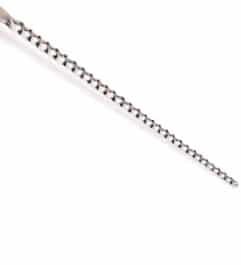
A broken file refers to separation of an endodontic instrument inside the root canal system.
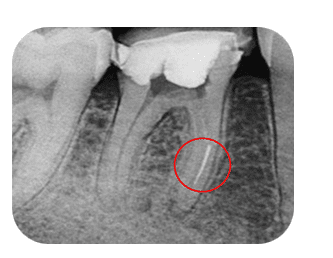
Also called “separated file”.
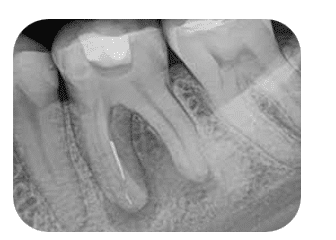
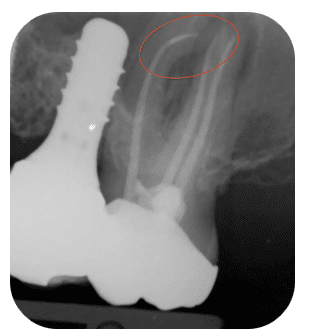
It usually involves:
- Ni-Ti rotary files
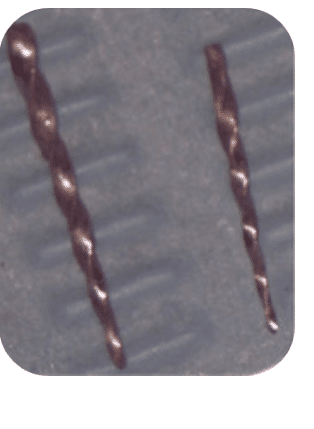
- Stainless-steel hand files
Why it concerns us?
The fragment becomes lodged within the canal path and obstructs further cleaning, shaping, and disinfection.
Why is it Clinically Important?
- Compromises prognosis if located in an infected canal.
- Prevents access to the canal portion below the fragment.
- Reduces effectiveness of canal disinfection.
1. What is another name for a broken file?
Prognosis Depends On
- Location (coronal / middle / apical third)
- Canal anatomy
- Presence of infection before breakage
- Operator skill
- Length of fractured segment
- Type of instrument
| Factor | Favorable | Unfavorable | Scientific Rationale |
|---|---|---|---|
| Location | Coronal > Middle third | Apical third | Apical fragments block disinfection and harbor bacteria. |
| Canal Anatomy | Straight canal | Sharp curvature | Curved canals increase risk of perforation and transportation. |
| Infection | No apical periodontitis | Pre-existing infection | Infected canals cannot be disinfected apically. |
| Operator Skill | Microscope + ultrasonics | Limited equipment | Better equipment improves bypass or retrieval. |
| Fragment Length | Short fragment | Long fragment | Long fragments lock mechanically. |
| Instrument Type | Stainless steel | Ni-Ti rotary | NiTi fractures without unwinding. |
Causes of Instrument Separation
Instrument Factors
- Cyclic fatigue — repeated flexing in curved canals leading to fracture.
- Torsional stress — when file tip locks but shaft keeps rotating.
- Manufacturing defects
- Corrosion or chemical weakening
Operator Factors
- Inadequate glide path
- Improper file use
- Reusing files excessively
- High rotational speed
- Inadequate lubrication
- Failure to irrigate frequently
What is the most common cause of NiTi instrument fracture?
How to Prevent Instrument Separation
Pre-operative prevention
- Study preoperative radiographs or CBCT.
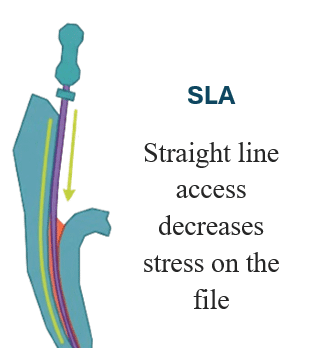
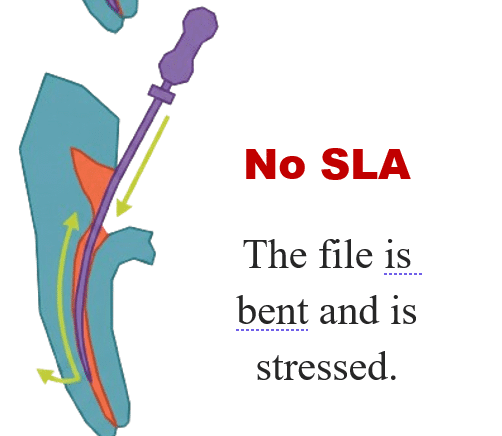
- Achieve straight-line access.
Proper Use of Rotary Files
- Use short light pecking motions
- Do not force files
- Clean file flutes frequently
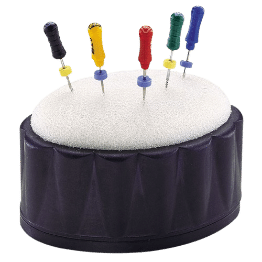
- Replace files early
- Use torque-controlled motors.
- Irrigate frequently with NaOCl.
- Use EDTA lubrication.
- Track number of file uses
-
Inspect files for unwinding or cracks
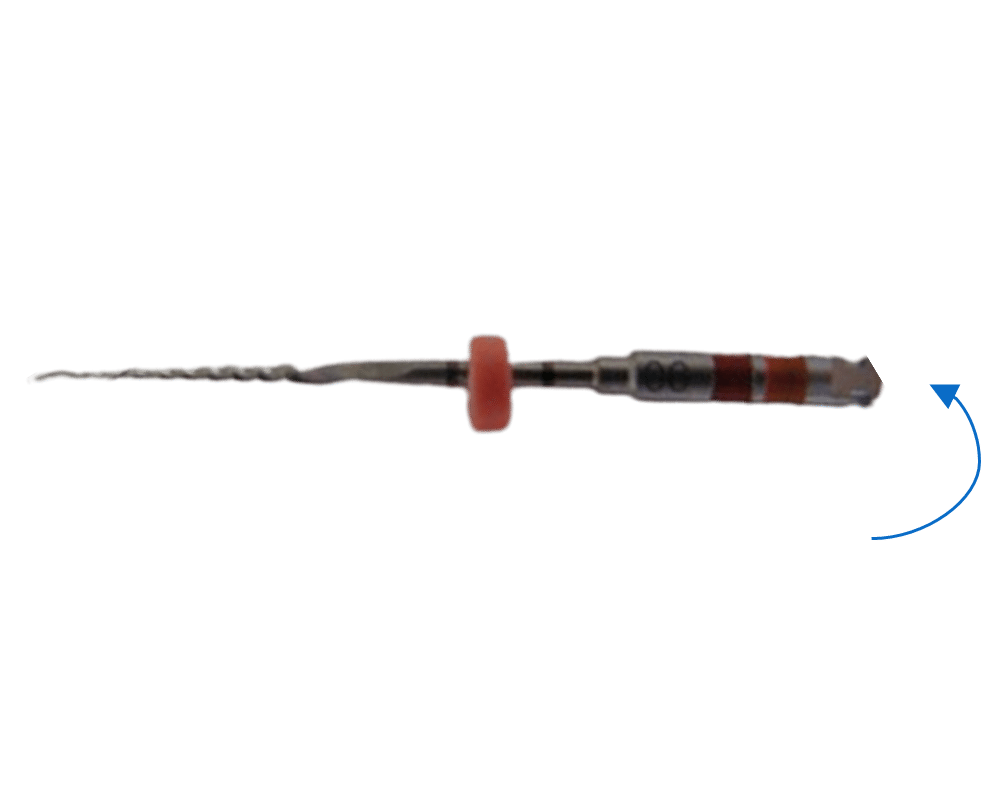
Management of Broken Files
Two major approaches:
- Bypass the fragment
- Retrieve the fragment
If both fail → surgical removal or extraction.
Bypassing the Broken Instrument
Sometimes the safest approach is not removing the fragment but bypassing it.
Bypass means sliding a small hand file beside the fragment until reaching working length.
Once the path is regained, the fragment becomes part of the obturation.
When do we choose to bypass?
- Fragment in apical third
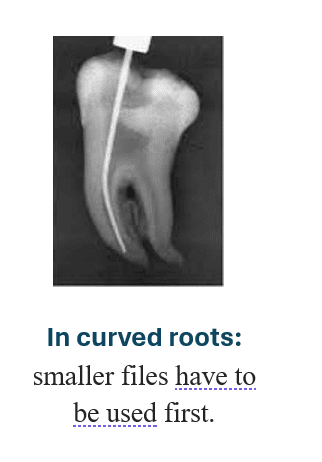
- Curved canals
- Long fragment
- When removal may cause perforation or dentin loss.
Clinical rule: If removing the fragment is risky → bypass it.
Instruments Needed for Bypass
- Dental operating microscope
- Small SS files (#6 #8 #10 #12 #15)
- EDTA gel
- NaOCl irrigation
- Ultrasonic tips
Step-by-Step Bypass Procedure
Step 1 — Improve access
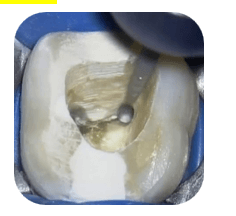
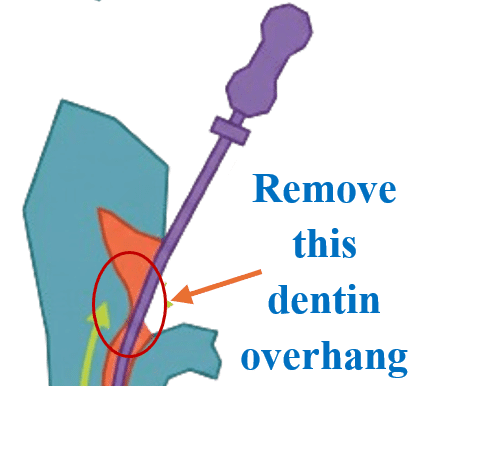
Create straight-line access
Step 2 — Create space coronally
Use ultrasonic tips to create a 0.5–1 mm cuff around fragment.
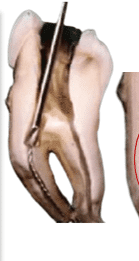
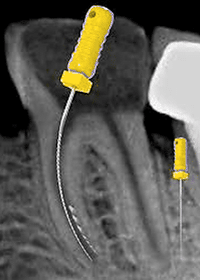
Step 3 — Pre-bend small file
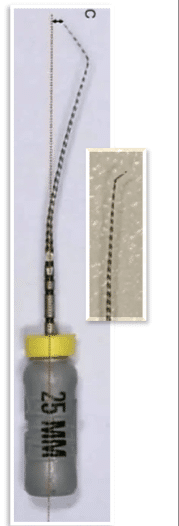
Use #10 K-file with sharp bend at the last 2–3 mm.
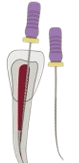
A straight file will not find the pathway.
Step 4 — Watch-winding motion
Use gentle watch-winding movement beside the fragment.
Never apply pushing pressure.
Step 5 — Enlarge pathway
Once #10 passes the fragment:
- #10 → #15 → #20
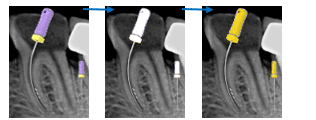
- Then rotary shaping
Step 6 — Confirm patency
When a #15 K-file reaches working length → patency restored.
Step 7 — Complete treatment
- Clean and shape normally
- Fragment remains inside canal.
- Considered part of obturation.
What is the main goal of bypassing a broken file?